South Africa's data centre 'gold rush' risks resource crunch



Rapid expansion of data centres has helped make South Africa the continent's biggest digital hub, even as critics warn the industry's appetite for electricity and water could worsen shortages affecting millions of people.
President Cyril Ramaphosa this month hailed the growth of data centres as essential for the country's security and its businesses, while calling for the protection of human rights and the environment amid the boom.
As Africa's largest economy, South Africa boasts advanced digital infrastructure, including connections with international sub-sea cables, helping to make it home to 70% of the continent's data centres, which house the computer servers that power everything from cloud computing to artificial intelligence.
Tech giants Microsoft and Amazon have committed billions of dollars to cloud and AI infrastructure in South Africa, where the sector is expected to more than double to $5-billion by 2031, a report from US-based market research firm Arizton Advisory & Intelligence said in March.
But data centres need large amounts of electricity to run the servers and water to cool the rooms they sit in, and South Africa's recent struggles to provide these basic necessities to citizens due to climate change-related drought and an aging power grid have exposed potential risks.
Even a small data centre can draw as much power as thousands of households and requires hundreds of thousands of litres of water a day.
'BRAGAWATTS'
In Johannesburg's industrial zone, at a data center run by South Africa's largest operator Teraco Data Environments, the scene resembles a set from the film "Charlie and the Chocolate Factory": shiny metal pipes, small multicoloured wires, rows of cabinets and a constant, low buzzing sound.
Bryce Allan, Teraco's head of sustainability, said South Africa's data centres are smaller than those elsewhere in the world and require less resource-intensive technology since they do not focus on training AI systems.
He said the market is a far cry from the US, where residents from Texas to California have campaigned against data centres. New York last week announced a statewide moratorium over worries about their environmental impact.
"The explosion of AI in the States - with gigawatt projects being announced, and the numbers coming through from operators that have decided to use evaporative cooling, and the water resources that they would deplete in doing that - are really creating a problem," he said. "Whenever people hear of AI coming to South Africa, they associate that US example and transcribe it over to here."
While evaporative cooling requires a constant supply of fresh water to keep servers cool, Teraco has claimed it uses closed-loop cooling, which recirculates the water.
"A 30 MW data centre using a closed-loop cooling system would consume the same amount of water as the average restaurant on an annual basis," Allan said.
While the US's thousands of data centres have a combined capacity of about 17 GW in order to run servers, South Africa now hosts more than 50 data centres with a combined capacity of 350 megawatts – less than 1% of the global total.
Some developers in South Africa have inflated the amount of electricity their facilities will have for servers, Allan said.
"Those 'bragawatts' create a big problem, because the reality is not nearly as sexy," he said. "It takes years for these facilities to actually ramp up to meet anything like half of that capacity."
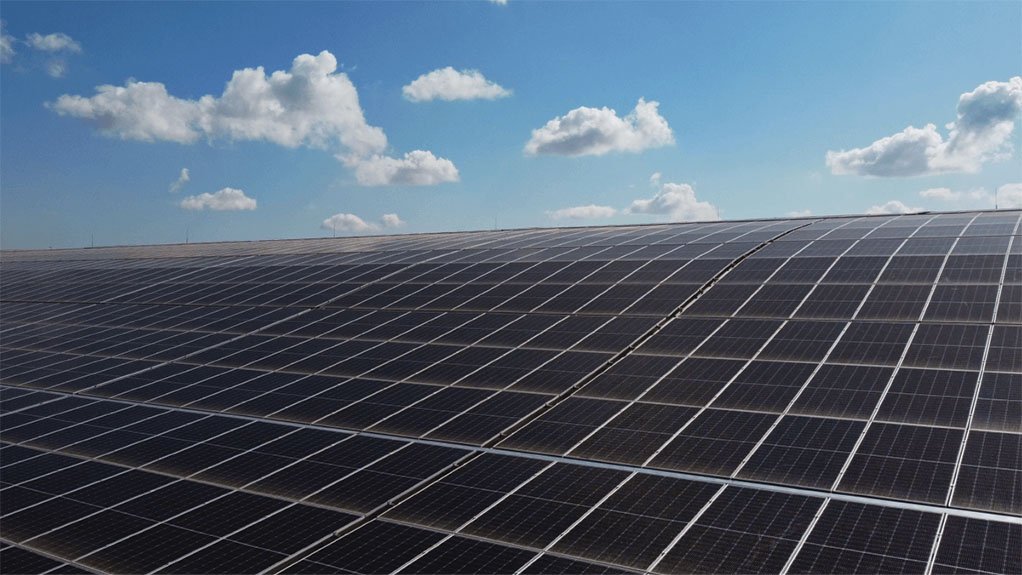
Teraco, which is owned by the US firm Digital Realty, runs on power from South Africa's electricity grid and uses diesel generators for backup. It is now building a 120 MW solar farm in South Africa's Free State that will also contribute to the grid when it begins operating next year.
The company expects to use 70% of its energy from renewable sources by the end of 2027 and 100% by 2035.
ECONOMIC NECESSITY
Data centres running on clean energy will prove crucial in South Africa to reduce stress on resources.
In 2018, the city of Cape Town warned it was facing "Day Zero," when the taps would run dry because of low water levels in reservoirs, and imposed restrictions to avoid the worst-case scenario.
The government was forced to introduce almost daily power cuts, known as loadshedding, across the country in 2023 to manage rising demand that aging infrastructure could not handle, although this has since eased considerably.
The state-owned power utility Eskom told the Thomson Reuters Foundation that it is able to meet existing demand from data centres. "There is no pressure on the grid," the company said in an email.
Solly Malatsi, South Africa's Communications and Digital Technologies Minister, said the government "takes seriously" concerns about whether data centres will intensify competition for electricity and water.
"It's worth noting that a number of mitigation measures are increasingly standard in the sector, including scheduling intensive workloads for off-peak periods and the use of closed-loop liquid cooling systems that significantly reduce water consumption," Malatsi said.
South Africa has a national policy that calls for environmentally sustainable data centres, and Malatsi said a just energy transition that is equitable for communities is a national commitment.
The sector is "critical to economic competitiveness," he said. "It underpins everything from financial services and cloud computing to the AI systems that will shape the next decade of economic activity, and it supports the wider digital ecosystem in which jobs are ultimately created."
Activists want more transparency and community consultation as data centres spring up across the country and have criticised the Cape Town municipality's approval last week of a new centre by US-based Equinix, which operates facilities worldwide.
"Part of the concern here is that it does feel like we're in this gold rush," said Daniel Hartford, who works on AI infrastructure accountability at tech justice non-profit Foxglove, which opposes the Equinix facility, arguing there was insufficient information on how much water it would use.
"When we look at our domestic power requirements, it necessitates a conversation about prioritising, when we have growth in the sector that is going to be so energy demanding," he said.
Article Enquiry
Email Article
Save Article
Feedback
To advertise email advertising@creamermedia.co.za or click here
Research Reports

Projects

Latest Multimedia
Latest News
Showroom

We supply customers with practical affordable solutions for their testing needs. Our products include benchtop, portable, in-line process control...
VISIT SHOWROOM
At Airshrink - CiP, we surpass customer expectations with innovative MV and LV cable accessories, including heat shrink joints, terminations,...
VISIT SHOWROOM

Announcements
What's On
Subscribe to improve your user experience...
Option 1 (equivalent of R125 a month):
Receive a weekly copy of Creamer Media's Engineering News & Mining Weekly magazine
(print copy for those in South Africa and e-magazine for those outside of South Africa)
Receive daily email newsletters
Access to full search results
Access archive of magazine back copies
Access to Projects in Progress
Access to ONE Research Report of your choice in PDF format
Option 2 (equivalent of R375 a month):
All benefits from Option 1
PLUS
Access to Creamer Media's Research Channel Africa for ALL Research Reports, in PDF format, on various industrial and mining sectors
including Electricity; Water; Energy Transition; Hydrogen; Roads, Rail and Ports; Coal; Gold; Platinum; Battery Metals; etc.
Already a subscriber?
Forgotten your password?
Receive weekly copy of Creamer Media's Engineering News & Mining Weekly magazine (print copy for those in South Africa and e-magazine for those outside of South Africa)
➕
Recieve daily email newsletters
➕
Access to full search results
➕
Access archive of magazine back copies
➕
Access to Projects in Progress
➕
Access to ONE Research Report of your choice in PDF format
RESEARCH CHANNEL AFRICA
R4500 (equivalent of R375 a month)
SUBSCRIBEAll benefits from Option 1
➕
Access to Creamer Media's Research Channel Africa for ALL Research Reports on various industrial and mining sectors, in PDF format, including on:
Electricity
➕
Water
➕
Energy Transition
➕
Hydrogen
➕
Roads, Rail and Ports
➕
Coal
➕
Gold
➕
Platinum
➕
Battery Metals
➕
etc.
Receive all benefits from Option 1 or Option 2 delivered to numerous people at your company
➕
Multiple User names and Passwords for simultaneous log-ins
➕
Intranet integration access to all in your organisation